BPDB Trapped by Expensive Rental Power Plants

15 March 2022 
------------------------------------------- 

Rental and Quick Rental Power Plants must be phased out as soon as possible 


The Government of Bangladesh has extended the PPA period of RPP and QRPPs up to two and a half times more than their recommended safe operating lifetime. These old and outdated rentals will create an additional burden of BDT 2,726 crore (USD 317 million) annually, with BDT 594 crore coming from capacity charges.

As a result of the Russian war on Ukraine, oil prices rose significantly to $140 per barrel on 7 March 2022. Prior to this price increase, it was estimated that the cost of electricity would increase at least 17% and 67% for DFG and HFO based power plants respectively due to their higher cost of fuel and additional capacity charges.

With soaring oil prices resulting from the Russian war on Ukraine, these costs are now projected to be much higher. Obsolete Rental power plants have sought further extension of their PPA period which will create a double negative impact on the Bangladesh economy and environment.

Download full paper

The Power Sector of Bangladesh 2021

3 March 2022
-------------------------------------------------------- 
Excess Capacity and Capacity Charge is weighing down the Bangladesh Economy : Increase efficiency in an emergency manner with transition to 100% Renewables!  


As per latest Annual Report of Bangladesh Power Development Board (BPDB), installed capacity reached 22,031 MW in FY 2020-21 which was 8.1% higher than the previous year. Still 8,239 MW of capacity remains unused this year. The generation of electricity was also increased to 80,422.54 gWh in FY 2020-21 which was 12.6% higher than FY 2019-20. 

The maximum demand of power was 13,792 MW which was 8.3% higher than FY 2019-20. However due to the additional demand of power , the rate of idle power plants decreased only 0.1% from last year — virtually unchanged. Similarly, the plant load factor (PLF) of the power sector reached 41.88% in FY 2020-21 from 40.91% in FY 2019-20. The PLF increased marginally, only 0.97% from the earlier year. Bangladesh power plants ran for only 153 days while they sat idle and unutilized for 212 days in FY 2020-21. 

BPDB paid BDT 51,878.96 crore (USD 6.10 billion) to buy electricity in FY 2020-21 which was 25.92% higher than BDT 41,198.80 crore (USD 4.84 billion) spent in the earlier year. As a result, the generation cost increased 11.8% higher to BDT 6.61 per kWh from BDT 5.91 in FY 2019-20. 

BPDB paid BDT 13,155.21 crore (USD 1.55 billion) to 37 private companies as Capacity Charges in FY 2020-21. The amount was 21.2% higher than last year. As a result, BPDB’s annual loss reached BDT 11,509.12 crore (USD 1.35 billion) in FY 2020-21 — a single year rate increase of 54.5% from BDT 7,450.24 crore in FY 2019-20. 

Subsequently, the GOB had to provide BDT 11,777.91 crore (USD 1.39 billion) as repayable subsidy to BPDB which was whooping 58.3% higher than the earlier year. Two consecutive years with annual losses of around BDT 10 thousand crore (USD 1.2 billion) is an alarming trend that caused BPDB to become a heavy burden on the Bangladesh economy at a time when resources were needed to address the unexpected health care emergency caused by Covid 19 pandemic. 

The top 12 companies, with installed capacity of 6,551.66 MW, received BDT 8,730.14 crore (USD 1,027.08 million) as capacity charge which is 66.4% of total capacity charge paid in FY 2020-21. Summit Group topped the list followed by United Group, Bangla Trac, China National Machinery Import and Export Corporation (CMC) and Orion Group. 

The top 12 power plants, with installed capacity of 4,763 MW, received BDT 65.02 billion (USD 764.95 million) as capacity charge in FY 2020-21 which is 49.4% of total capacity charge. Payra Coal Power Plant topped the list followed by Sirajganj 410 MW Dual Fuel Power Plant, Keraniganj 300 MW HSD Power Plant and Meghnaghat 337 MW Dual Fuel Power Plant. 

Six power plants did not generate any electricity and consumed 3.15 gWh of electricity from the national grid creating a negative drag on power production. Five power plants didn’t generate any electricity. The 10 most expensive power plants generated 184.52 gWh (1.76% of their capacity) of electricity at an average cost of BDT 106.94 per unit. 

The GOB approved 46 power plants with an installed capacity of 49,392 MW to be constructed by 2030. Many of these are gas plants even though Petrobangla can only supply only 55.3% of current demand of fossil gas for power generation. 

LNG costs reached record high levels in 2021 forcing BPDB to pay much higher fuel costs. The excessive dependency on costly LNG will not only emit increased GHGs but also create unbearable pressure on the national economy. 

The total installed capacity will reach 37,731 MW in 2025 and 49,392 MW in 2030 against demand of 19,900 MW and 27,400 MW respectively. As a result, 17,831 MW and 21,992 MW of power will become stranded assets by 2025 and 2030 creating more weight dragging down the Bangladesh economy. 

To compensate the improvident installation plan in the power sector, BPDB could face loss of BDT 26,533 crore (USD 3.12 billion) in FY 2021-22, BDT 50,000 crore (USD 5.81 billion) in FY 2024-25 and BDT 63,000 crore (USD 7.33 billion) in FY 2029-30 which will further increase the price of power at consumers’ end. 

Immediately halt the construction of new fossil fuel power plants (including ones based on coal and LNG) and cancel all approvals of new LNG based power plants which have not achieved financial closure. Shift those resources to investments in renewable energy to come online much more quickly and meet any new generation demand that might be needed in 2027. 

No more extension of the tenure of expensive fossil fuel based RPPs, QRPPs and IPPs. There is simply no economic justification for their continuation due to the overcapacity of power. No more extension of the tenure of expensive fossil fuel based RPPs, QRPPs and IPPs. There is simply no economic justification for their continuation due to the overcapacity of power. Shutting down the loss making power plants to avoid further record setting losses is also crucially important. 

Implement rapid installation of RE Projects at both distributed and utility scale on unused lands at the power hubs. To fulfil this target, significant allocation for RE should be made in the Annual Development Programme (ADP) of the national budget. 

Increase Energy Efficiency at internationally accepted levels to supply cheaper and more reliable electricity consistent with recommendations in the 8th Five Year Plan, Perspective Plan 2041 and in the NDC 2021. 

Immediately implement massive T&D projects on an urgent basis to supply the generated electricity to the consumers so that the overcapacity could be reduced at a significant level. 

Endorse the Clean Air Act and impose Green Tax immediately to control emissions and penalise the power plants which emit excessive CO2, SOx and NOx than permitted under the act. 

Reduce the staff of public power plants and decentralize BPDB through decommissioning power plants and regional distribution systems to newly formed public sector power generating and distribution companies. 

More than one-third of Bangladesh power generation capacity is not being used creating stranded generation assets that are paid to sit idle. If Bangladesh continues spending millions constructing new fossil fuel power plants that are not needed, it will drive power costs up even more and weigh down the Bangladesh economy. A target plant load factor should be established at minimum 70% before any new power plants are allowed to begin or continue construction. Loans to build fossil fuel plants were based on 80% load factors. Unutilized power generation with current plant load factors of only 41.88% provides no benefit to Bangladesh consumers, only increased costs. 

It is much more sound fiscal management to retire unutilized plants, adopt a No Electricity No Payment (NENP) policy and stop the costly construction of new fossil fuel plants that are not needed. This will allow electricity usage to catch up to capacity and more efficiently utilize existing assets and stop an ever increasing weight on the Bangladesh economy caused by the power sector.

Join Our Team: Energy Campaigners

The Bangladesh Working Group on External Debt (BWGED) is a flexible forum of civil society organizations and individuals from different areas of Bangladesh. BWGED works to monitor bilateral and multilateral institutions who finance in the sectors of Climate, Energy, Large Infrastructure and Water Resources. It focuses on the fossil fuel investments in the energy sector of Bangladesh. BWGED works for shifting the finance flow not only towards 100% renewables but also respecting human and environmental rights for just and equitable energy access through its Campaign for Sustainable Energy.

BWGED is seeking two personable Energy Campaigners with the experience and ability to organize campaigns environmental and human rights in Bangladesh. It is a part-time 6-month position but there is a possibility of extension.

JOB RESPONSIBILITIES

  1. Communicating state and non-state stakeholders including respective authorities, civil society representatives, private sector, academia, media, service providers related other persons/institutions;
  2. Generating the ideas and preparing the circulars, creative contents for website and social media and campaign materials like banners, festoons, placards and streamers.
  3. Preparing the reports of coordination meetings, roundtables, dialogues and seminars;
  4. Contributing to the innovative research, research findings and compiling the results;
  5. Working closely with the Research and Campaign Team. 

JOB STATION

Khulna City

WORKING TIME

Part-time | 2:00 - 6:00 PM | Saturday - Thursday

EDUCATIONAL QUALIFICATION

Bachelor Degree (Development Studies, Literature, Environmental Science, Public Administration, Sociology or any relevant Subjects) from any reputed University

EXPERIENCE

One year of experience in related fields preferred but Freshers are also encouraged to apply

ADDITIONAL REQUIREMENTS

  1. Age: 23 - 30 Years
  2. Strong proficiency in understanding, speaking and writing in Bengali and English
  3. Strong competencies on Office management software (Word Processing, Excel and PowerPoint)
  4. Experience of organizing seminars, gathering and conferences
  5. Specialization in online communication and social media
  6. Ability to meet deadlines and work under pressure
  7. Self motivated, target oriented, enthusiastic and proactive

If you think you are fit for the position, please send your Curriculum Vitae (CV) with a Cover Letter to bwged.bd@gmail.com. Only shortlisted candidates will be contacted to appear for the physical interview.

LAST DATE TO APPLY

15 March 2022, Tuesday 5:00 PM (Bangladesh Time)


BWGED is an equal opportunity employer but gives priority to gender and ethnic diversity

Update on the Coal Power Plants in Bangladesh: Feb 2022

 18 February 2022 | Hasan Mehedi

------------------------------------------- 
The Government of Bangladesh (GOB) declared the cancellation of 10 approved coal power plants on 27 June 2021 which had an installed capacity of 8,451 MW (Daily Star 2021). In November 2021, the Minister of State for the Ministry of Power, Energy and Mineral Resources (MOPEMR) also assured that the GOB will not undertake any new coal power plant (AB News24 2021). But two power plants — Gazaria 635 MW Coal Power Plant and Maheshkhali 1320 MW Coal Power Plant — are still on the Planned Power Plant list of the Bangladesh Power Development Board (BPDB). It is to mention that the approved 282 MW coal power plant in the Meghnaghat area proposed by Orion Dhaka Power Limited was on the cancellation list. 

The current scenario (13 February 2022) of in-operation, under-construction, and planned coal power plants, are as follows: 

1. Power Plants in Operation 

Bangladesh entered into coal power generation in 2006. Currently, two coal power plants with an installed capacity of 1,845 MW and derated capacity of 1,738 MW are under operation in Bangladesh. The power plants are Barapukuria Coal Power Plant and Payra Coal Power Plant (Phase-I). 

1.1 Barapukuria 525 MW Coal Power Plant 
The power plant is operated and sponsored by BPDB and financed by the Export–Import Bank of China (CHEXIM), Hongkong and Shanghai Banking Corporation Limited (HSBC), and the Industrial and Commercial Bank of China (ICBC). The power plant was constructed in three phases and started commercial operation on 1 July 2006 (Unit-I) and 1 January 2018 (Unit-II & III). The power plant supplies 494 MW (derated capacity) while the installed capacity is 525 MW as constructed. 

In FY 2019-20, the power plant generated 2,067.03 gWh of electricity at 48.8% Plant Load Factor (PLF), 25.5% efficiency, and a rate of BDT 6.98/kWh. In FY 2020-21, the generated electricity decreased to 1,184.82 gWh at 27.4% PLF, 29.7% efficiency, and a rate of 8.99/kWh. 

1.2 Payra 1320 MW Coal Power Plant (Phase-I) 
The power plant is operated by Bangladesh-China Power Company Private Limited (BCPCL) and equally sponsored by North-West Power Generation Company Limited (NWPGCL) and China National Machinery Import and Export Corporation Limited (CMC). BPDB signed a Power Purchase Agreement (PPA) with BCPCL to supply 1,244 MW (derated capacity) while the installed capacity is 1320 MW as declared. On 31 December 2017, GOB gave a sovereign guarantee for USD 1.0 billion against the ECA loan of USD 1,984 million from CHEXIM, and subsequently, the BCPCL reached financial closure on 3 May 2018. 

The scheduled commercial operation date (COD) of the power plant was April 2019 (Unit-I) and October 2019 (Unit-II), but it started operation on 15 May 2020 (Unit-I) and 8 December 2020 (Unit-II). In FY 2019-20, the power plant generated 831.94 gWh of electricity at 16.7% PLF, 36.9% efficiency, and at a rate of BDT 6.27/kWh and received BDT 220.41 crore as capacity charge. In FY 2020-21, the generated electricity increased to 3,811.92 gWh at 35% PLF, 39.7% efficiency, and at a rate of 8.60/kWh, and received BDT 1,996.16 crore as the capacity charge. 

2. Under Construction 

Currently, seven coal power plants are under construction of which six are in Bangladesh and one in India. The domestic coal power plants have an installed capacity of 6,830 MW (derated capacity 6,462 MW) while Godda Coal Power Plant in Jharkhand, India has an installed capacity of 1,600 MW and derated capacity of 1,496 MW. The under-construction power plants are: (i) Banshkhali 1,224 MW Coal Power Plant; (ii) Barishal 350 MW Coal Power Plant; (iii) Godda 1,600 MW Coal Power Plant; (iv) Matarbari 1200 MW Coal Power Plant (Phase-I); (v) Patuakhali 1320 MW Coal Power Plant; (vi) Payra 1320 MW Coal Power Plant (Phase-II) and (vii) Rampal 1320 MW Coal Power Plant. 

2.1 Banshkhali 1224 MW Coal Power Plant 
The power plant is proposed by SS Power Limited (SSPL) and sponsored by S. Alam Group (70%), SEPCOIII Electric Power Construction Corporation (SEPCO3) [20%], and HTG Development Group Company Limited (HTGDG) [10%]. BPDB signed a PPA with SSPL on 16 February 2016 to supply 1,224 MW (derated capacity) to the national grid while the installed capacity is 1,320 MW as declared. 

In September 2018, the GOB gave a sovereign guarantee of USD 1,250 million for a loan of USD 1,759.07 million from the China Development Bank (CDB), Bank of China (BOC), and China Construction Bank (CCB), and subsequently, SSPL reached financial closure in December 2020. 

The expected Commercial Operation Date (COD) of the power plant was November 2019 which was shifted to June 2022 and September 2022. The expected COD has further been shifted to November 2022. As per the latest BPDB report, the progress of construction was 85% till 13 February 2022.

2.2 Barishal 350 MW Coal Power Plant
Operated by Barishal Electric Power Company Limited (BEPCL) and 4% owned by ISO Tech Electrification Company Limited (ITECL) and 96% by Sinohydro (Hong Kong) Holdings Limited (SHKHL). The name of Taylor Power Environmental Company Limited (TPEL) is mentioned as a co-sponsor on the website of ISO Tech Group but the stake is unclear as there is no information publicly available. BPDB signed a PPA with BEPCL on 12 April 2018 to supply 307 MW [derated capacity] while the installed capacity of the power plant is 350 MW as declared. 

On 23 December 2020, the GOB gave a sovereign guarantee for ECA of USD 380 million and subsequently BEPCL reached financial closure in March 2021. The expected COD of the power plant was 12 January 2022 which was shifted to December 2022. As per the latest BPDB report, the progress of construction was 70% till 13 February 2022. 

2.3 Godda 1600 MW Coal Power Plant 
The power plant is proposed and sponsored by Adani Jharkhand Power Limited (AJPL) which is a subsidiary of Adani Power Limited of Adani Group. BPDB signed a PPA with AJPL on 5 November 2017 to supply 1,496 MW [derated capacity] to the national grid while the installed capacity of the power plant is 1,600 MW as declared. In April 2018, AJPL reached financial closure with a USD 1,400 million loan from Power Finance Corporation Limited (PFC) and Rural Electrification Corporation Limited (REC). 

The expected COD of the power plant was June 2022 which was shifted to July 2022 (Unit-I) and December 2022 (Unit-II). Later, the expected COD again shifted to August 2022 (Unit-I) and December 2022 (Unit-II). As per the latest BPDB report, the progress of construction was 77% till 13 February 2022. 

2.4 Matarbari 1200 MW Coal Power Plant (Phase-I) 
The power plant is proposed by Coal Power Generation Company Bangladesh Limited (CPGCBL) and sponsored by Japan International Cooperation Agency (JICA) [62%] and BPDB [38%]. BPDB signed a PPA with CPGCBL on 27 July 2017 with CPGCBL to supply 1,200 MW [derated capacity] although the derated capacity is 1,104 MW as per the Revisited Power System Master Plan 2016 (RPSMP 2018). 

In February 2014, the GOB gave a sovereign guarantee for an ECA loan from JICA and subsequently, CPGCBL reached financial closure in the last week of June 2015. The expected COD of the power plant is January 2024 (Unit-I) and July 2024 (Unit-II). As per the latest BPDB report, the progress of construction was 52% till 13 February 2022. 

2.5 Patuakhali 1320 MW Coal Power Plant 
The power plant is proposed by RPCL-Norinco International Power Limited (RNPL) and sponsored by Rural Power Company Limited (RPCL) [50%] and Norinco International Cooperation Limited (Norinco) [50%]. BPDB signed a PPA with RNPL on 5 March 2019 to supply 1,247 MW [derated capacity] to the national grid while the installed capacity of the power plant is 1,320 MW as declared. 

On 27 August 2020, GOB gave a sovereign guarantee for an ECA loan of USD 1,777 million from CHEXIM and Bank of China (BOC) and subsequently RNPL reached financial closure on 24 December 2020. The expected COD of the power plant was February 2023 (Unit-I) and August 2023 (Unit-II) which has been shifted to March 2024 (Unit-I) and August 2024 (Unit-II). As per the latest BPDB report, the progress of construction was 51% till 13 February 2022. 

2.6 Payra 1320 MW Coal Power Plant (Phase-II) 
The power plant is proposed by BCPCL and sponsored by NWPGCL [50%] and CMC [50%]. BPDB signed a PPA with BCPCL on 17 December 2018 to supply 1,244 MW (derated capacity) to the national grid while the installed capacity is 1,320 MW as declared. 

In August 2020, the GOB gave a sovereign guarantee for USD 775 million against the USD 1,547 million ECA loan from the Export–Import Bank of China (CHEXIM), and subsequently, BCPCL reached financial closure in March 2021.

The expected COD of the power plant was June 2023 (Unit-I) and December 2023 (Unit-II) which was shifted to May 2024 (Unit-I) and June 2024 (Unit-II). The expected COD has again been shifted to June 2024 (Unit-I) and December 2024 (Unit-II). As per the latest BPDB report, the progress of construction was 21% till 13 February 2022. 

2.7 Rampal 1320 MW Coal Power Plant 
Formally known as Maitree Super 1320 MW Coal-fired Power Plant, the Rampal Coal Power Plant is proposed by Bangladesh-India Friendship Power Company Limited (BIFPCL) and sponsored by BPDB [50%] and National Thermal Power Corporation Limited (NTPC) [50%]. BPDB signed a PPA with BIFPCL on 12 July 2016 to supply 1,240 MW (derated capacity) to the national grid while the installed capacity is 1,320 MW as declared.

On 9 April 2017, the GOB gave a sovereign guarantee for a USD 1,600.22 million ECA loan from the Export-Import Bank of India (INEXIM), and subsequently, BIFPCL reached financial closure on the same day.

The expected COD of the power plant was February 2021 (Unit-I) and August 2021 (Unit-II). Later the dates shifted to March 2022 (Unit-I) and July 2022 (Unit-II). In February 2022, the COD date was further estimated as June 2022 and November 2022. As per the latest BPDB report, the progress of construction was 73% till 13 February 2022 although the bidding process for supplying coal is yet to be finished

3. Planned Power Plants 

Although the GOB declared no more installation of coal power plants, two power plants are still in the list along with the 2nd phase of Matarbari Coal Power Plant as per the progress report of BPDB dated 13 February 2022. The power plants are as follows: 

3.1 Gazaria 635 MW Coal Power Plant 
The power plant is proposed by Orion Power Dhaka-2 Limited (OPDL-2) under Orion Group of Bangladesh. BPDB signed the PPA for the power plant on 21 April 2016. The sponsor company signed an agreement with General Electric (USA) on 28 April 2016 to supply the necessary equipment for the power plant. There is no updated information on the sovereign guarantee or ECA loan for the power plant. 

The expected Commercial Operation Date (COD) of the power plant was June 2023 which was shifted to December 2026. As per the progress report of BPDB (13 February 2022), the Power Division recommended shifting the power plant from Gazaria (Munshiganj) to alternative sites in Matarbari or other places in Maheshkhali, Cox’s Bazar. 

3.2 Maheshkhali 1320 MW Coal Power Plant 
The power plant is proposed and sponsored by BPDB under a loan from an Export Credit Agency (ECA) but hasn't disclosed the name of any specific ECA till 13 February 2022. The expected COD of the power plant was June 2027 which has been shifted to June 2028. BPDB is prepared to float the second round of bidding to select an Engineering, Procurement, and Construction (EPC) contractor as per the progress report of BPDB (13 February 2022). 

3.3 Matarbari 1200 MW Coal Power Plant (Phase-II) 
The power plant is proposed by CPGCBL and sponsored by JICA [62%] and BPDB [38%]. BPDB has not signed any PPA with CPGCBL to supply electricity from the power plant. No information on the sovereign guarantee or financial closure is available to date. The expected COD of the power plant was June 2029 which has been shifted to June 2030. As per the progress report of BPDB, the feasibility study is going on till 13 February 2022. 

4. Recently Cancelled 

The GOB canceled 10 power plants in June 2021. Earlier than that several coal-fired power plants were canceled by the sponsors or financing institutions. 

4.1 Mirsarai 1320 MW Coal Power Plant 
The power plant was proposed in June 2017 by a joint venture of three Chinese companies namely Hangzhou Jinjiang Group Company Limited, Hangzhou Zhengcai Holding Group Company Limited, and Jindun Energy Equipment (Hong Kong) Limited. BPDB issued a Letter of Intent (LOI) to the sponsors on 23 July 2018 to supply 1240 MW (derated capacity) to the national grid from the power plant. The expected COD of the power plant was June 2026 as per the BPDB progress report (December 2021). As per the BPDB report of January 2022, the power plant was dropped from the list (10 January 2022). 

4.2 Mawa 522 MW Coal Power Plant 
The Power Plant was proposed by Orion Dhaka Power-I Limited (OPDL) and sponsored by Orion Power Meghnaghat Limited (OPML) under Orion Group. Chinese company Fujian Long Energy Company Limited and UAE-based Firstgen Energy were supposed to join OPDL as co-sponsors of the power plant. The power plant was on the list of Planned Power Plants of BPDB until 9 August 2021 even after the government formally canceled it. But the power plant was dropped from the list in September 2021 (3 September 2021). 

Earlier, the Government canceled the approval of 10 coal power plants in June 2021. The power plants are: 
  1. Bangladesh-Singapore 700 MW USC Coal-fired Power Plant proposed by CPGCBL and Sembcorp Utilities Private Limited 
  2. Chattogram (Chittagong) 282 MW Coal-fired Power Plant proposed by Orion Group 
  3. CPGCBL-Sumitomo 1200 MW Coal-fired Power Plant proposed by CPGCBL and Sumitomo Corporation 
  4. Dhaka 282 MW Coal-fired Power Plant proposed by Orion Group 
  5. Khulna 565 MW Coal-fired Power Plant proposed by Orion Group 
  6. Maheshkhali 1320 MW Coal-fired Power Plant (1) proposed by BPDB 
  7. Maheshkhali 1320 MW Coal-fired Power Plant (2) proposed by BPDB 
  8. Mawa 522 MW Coal-fired Power Plant proposed by Orion Group
  9. North Bengal 1200 MW Super Thermal Power Plant proposed by Ashuganj Power Station Company Limited (APSCL) and
  10. Patuakhali 2X660 MW Coal-fired Power Plant proposed by APSCL

GOB is to cancel 6 more coal power plants

Friday, 29 October 2021 | Hasan Mehedi
------------------------------- 
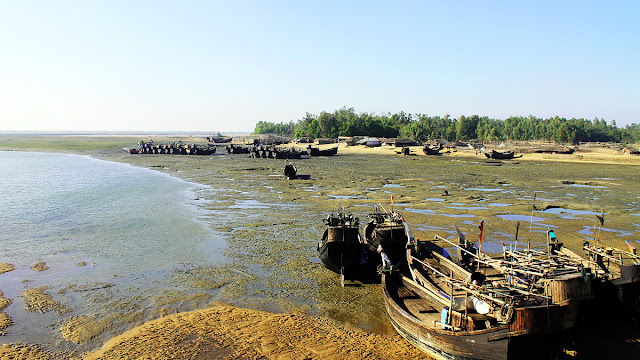
View of Maheshkhali Islands. Photo credit: Tanweer Morshed, Wikipedia

The Government of Bangladesh (GOB) is to declare the cancellation of 6 more coal-fired power plants which were planned to be developed on the Maheshkhali Islands. The total capacity of these planned power plants is 7920 MW. 

The enlisted power plants to be cancelled are:
  1. Maheshkhali 1320 MW (BPDB-CHDHK) Coal Power Plant (Phase-I)
  2. Maheshkhali 1320 MW (BPDB-CHDHK) Coal Power Plant (Phase-II)
  3. Maheshkhali 1320 MW (BPDB-TNB) Coal Power Plant
  4. Maheshkhali 1320 MW (BPDB-KEPCO) Coal Power Plant
  5. Maheshkhali 1320 MW (BPDB-SEPCO) Coal Power Plant; and
  6. Maheshkhali 1320 MW (BR PowerGen) Coal Power Plant
Earlier in June 2021, the Government cancelled 10 approved coal power plants in different zones of Bangladesh. Among those, two power plants with a capacity of 2640 MW were based on the Maheshkhali Islands. The GOB had a plan to develop 10 coal power plants with a capacity of 12960 MW on the island. 

Among those, Matarbari 1200 MW Phase-I financed the Japan International Cooperation Agency (JICA) and sponsored by the Coal Power Generation Company Bangladesh Limited (CPGCBL) is under construction now and a feasibility study of Matarbari 1200 MW Phase-II is going on. Two power plants - Maheshkhali Coal Power Plant (Phase-I) and Maheshkhali Phase-II were cancelled in June 2021. 

These power plants are going to be cancelled as no progress has been seen on the ground. The GOB is planning to convert these power plants from coal to LNG and renewable energy. 

The Bangladesh Power Development Board (BPDB) has already acquired 5518 acres and is in the process of acquiring 96 acres of land on the Maheshkhali Islands to develop coal and LNG-fired power plants of which 3000 MW would be generated from Liquefied Natural Gas (LNG)

Saiful Islam Azad, Secretary of BPDB wrote a letter to the Ministry of Power, Energy and Mineral Resources (MOPEMR) mentioning that two ultra-super critical (USC) power plants with a capacity of 2640 MW were planned to be developed by Bay of Bengal Power Company Limited, which is a Joint Venture Company (JVC) with equal share of BPDB and China Huadian Hong Kong Company Limited (CHDHK).

The BPDB had signed Memorandum of Understandings (MOU) with four foreign companies to build four coal power plants in Maheshkhali with a capacity of 5280 MW. 

The Coal Power Plants under JVCs are: Maheshkhali 1320 MW coal power plant under JVC of BPDB and Malaysia based Tenaga Nasional Berhad (TNB), Maheshkhali 1320 MW under JVC of BPDB and Korea Electric Power Corporation (KEPCO) and Maheshkhali 1320 MW coal power plant under JVC of BPDB and SEPCO Electric Power Construction Corporation (SEPCO).

In addition to the JVCs, BR PowerGen Limited (a subsidiary of BPDB and Rural Power Company Limited) proposed to develop a coal power plant on the Maheshkhali Islands with a capacity of 1320 MW. There is no progress observed after signing the MOUs. 

Additionally, BPDB agreed in principle to provide 30 acres of land on lease for building a 726 MW LNG based combined cycle power plant on Maheshkhali Island, as per a proposal of Orion Power Dhaka Limited, a subsidiary of Orion Group. It is to mention that Orion Group is the third largest Independent Power Producer (IPP) in Bangladesh.

The power projects cancelled in June are:
  1. Patuakhali 1320 MW coal power plant of Ashuganj Power Company Limited (APSCL)
  2. North Bengal 1200 MW coal power plant of APSCL
  3. Mawa 522 MW coal power plant of Orion Group
  4. Dhaka 282 MW coal power plant of Orion Group
  5. Chattogram (Chittagong) 282 MW coal power plant of Orion Group
  6. Khulna 565 MW coal power plant of Orion Group
  7. Maheshkhali 1320 MW coal power plant (Phase-I) of BPDB
  8. Maheshkhali 1320 MW coal power plant (Phase-II) of BPDB
  9. Bangladesh-Singapore 700 MW coal power plant of CPGCBL and Sembcorp Utilities Private Limited (SUPL) and
  10. CPGCBL-Sumitomo 1200 MW coal power plant of CPGCBL and Sumitomo Corporation

A senior official in BPDB said that the cancellation will not cause any problem in electricity supply. Gas, LNG and renewable energy will take the place of the coal power plants. Besides, the Government will focus on increasing locality-based power generation capacity.

AIIB investment skewed towards fossil fuel despite green promises

13 Oct 2021, Dhaka 
------------------------- 
The Asian Infrastructure Investment Bank (AIIB) invested more than half a billion US dollar in the Bangladeshi energy sector over the last five years. However, they haven’t invested a single penny on green and clean energy in this country, which is outright opposite of their commitment to environment and social standard. 

A recently released report, “Financing Fossil Fuels Failing Our Future” reveals AIIB’s continuous, controversial investment in fossil fuel in Bangladesh. It reveals that this Beijing- headquartered multilateral development bank has invested over 600 million US dollars in the Bangladeshi energy sector with a staggering y-o-y growth of 23%, none of which contributed to greening Bangladesh’s economy. 

Bangladeshi climate groups Bangladesh Working Group on External Debt (BWGED) and Coastal Livelihood and Environmental Action Network (CLEAN), Manilla-based NGO Forum on ADB, Amsterdam-based Recourse and Berlin-based Urgewald jointly published this report at a virtual launching event on Wednesday. 

“AIIB shareholders like the UK are pledging to stop funding fossil fuels but keep backing fossil fuel in climate vulnerable Bangladesh through AIIB. Not one of AIIB’s energy investments in Bangladesh supports renewables. This is unacceptable in a time of climate crisis. Time’s up AIIB – finance out of fossils now,” said Petra Kjell, Campaign Manager Recourse. 

The report reveals some disturbing facts around the combined cycle power plant in Bhola. The local communities are still awaiting compensation for land acquisition while the operating company NBBL (Nutan Bidyut Bangladesh Ltd.) showed unprecedented irresponsibility as disposal of sand and debris from the construction site blocked a local canal causing flooding of croplands. 

“This report reveals a critical reality check. Not a single investment in the energy sector in Bangladesh has been used towards meeting the 'last mile' needs of local communities through decentralized renewables; instead the AIIB's so-called 'infrastructure for tomorrow' has not only wreaked havoc on the livelihoods of local people, but also left a trail of flawed, corrupt or non-existent consultation processes”, said the report co-author Tanya Lee Roberts-Davis. 

According to the report, AIIB is a post-Paris agreement multilateral development bank committed to align its finance flow with the objectives of the Paris agreement. In May this year, AIIB amended its Environment and Social Framework (ESF) with an aim to better help its clients make progress on their contributions to the Paris Climate Agreement and achievement of the sustainable development goals. However, this policy apparently doesn't reflect on its practice. 

“AIIB is a bank with a dominant Chinese share, and Germany being the biggest non-regional shareholder. Both should combine their promises and translate them into responsibility. They should implement hard rules including strict time-bound information disclosure to stop doing harm to the people and environment”, said Dr. Nora Sausmikat, lead of the China Desk of Urgewald. 

The report also pointed out that AIIB is directly facilitating coal power dependency by connecting the coal-fired plants of the Chattogram-Cox's Bazaar area with the national grid through constructing 27-km overhead and underground transmission lines. 

“AIIB breaches its own policies for not financing coal through financing transmission lines in the Chattogram zone. It also violated its safeguard policies by not disclosing the project information and giving inadequate compensation. The bank has to compensate the people for its irregularities as there is no court to sue the bank”, said Professor Shamsul Alam, Energy Adviser of the Consumers Association of Bangladesh (CAB).

Online Course on Energy Environment of Bangladesh (Batch-2)


After completion of the first batch of Online Course on Energy Environment of Bangladesh in association with 350.org, Bangladesh Environmental Lawyers Association (BELA), Change Initiative, CLEAN (Coastal Livelihood and Environmental Action Network), Growthwatch, Japan Center for Sustainable Environment and Society (JACSES), NGO Forum on ADB, Recourse and Urgewald, the Bangladesh Working Group on External Debt (BWGED) is going to organize 2nd batch of the Online Course on Energy Environment of Bangladesh from August 2021.

Duration of the 2nd batch will be 8 weeks (16 sessions) where 20 national and international experts will conduct the sessions on different aspects of energy and environmental governance in Bangladesh. Graduates of the first batch will moderate the sessions of the 2nd batch. Brochure of the 2nd batch can be seen here. 

Benefits

Certificate of graduation endorsed by the co-organizing institutions; opportunity to join hands-on training and research of BWGED and joining as a member of new Youth Group for Energy and Environmental Movement in Bangladesh. 

Course Topics

  • Landscape of the Energy and Power Sector
  • Carbon Emission from the Energy Sector
  • Socio-environmental Impact of energy project
  • Energy Related policies and laws
  • Economic Impacts of the Energy Sector
  • Energy Sector: Role of ADB and AIIB in Bangladesh
  • Human Rights in the World Bank’s Energy Investments
  • Role of Japan & China in the Energy Sector
  • Problems and Potential of Indian Investments in the Energy Sector in Bangladesh
  • SDGs, Paris Agreement and Energy Sector
  • Corruption in the Energy Sector: Case Study of Niko Resources
  • Major Investors in the Energy Sector of Bangladesh
  • Potential of Renewable Energy in Bangladesh
  • Renewable Energy: Debunking the Myths
  • Techniques of Monitoring Energy Projects
  • Closing and Certificate Distribution

Eligibility

40 undergraduate and bachelor level students and environmental activists who are aged between: 20-30 years; Want to work on the Energy & Environment; able to participate in 1-hour long 16 sessions in 8 weeks; Capable of submitting written assignments and not involved in any other jobs for 100% time.

Language

The sessions of the course will be conducted in both Bengali and English. The assignments are to be submitted in any of the languages. The participants are to follow the languages of the course facilitators.

Application

Interested candidates are requested to submit their application through this Application Form on/before 5 August 2021